Saturday, December 11, 2010

Minnesnowta and other Thoughts

Here we are on December 11, 2010, one of the days where Minnesotans have tweeted and Facebooked about our massive snowfall than just about any other day in the past several years. I remember the first year I lived in the US, in 1996, we had so much snow that the corners were far over our heads. As a 14 year old, I was ecstatic to build our first fort and learn what this whole snow thing is about.

Well, now I'm 29 and I am married to a Minnesotan, meaning that we also live in Minnesota. Kerby is a rock star husband in MANY ways, but today, he's stellar because he's spent a couple hours out there snowblowing - not shoveling, mind you, and it has been past two hours - all the huge snowdrifts that have locked us in our home. In the meantime, I have cooked Mexican food, checked Facebook, read my Bible and now I'm blogging. Oh, the joys of being a spoiled wife!

On a different note, working in real estate with Kerby has been a blast, and we see this going at increased momentums for years to come! And on a real estate note, I find it interesting that rates are going up - while still at a low 4.75% this week, it makes it the best time to buy NOW before interest rates shoot up. Owning a home has NEVER been this affordable in most of our lifetimes - it costs about 15% of your income instead of the usual, like 30% to own a home. Cheaper than rent.

Hhhhhmmm, I guess a lot has changed since I was 14. You wouldn't have found me talking or blogging about a husband, interest rates or the housing market! :)

Thursday, July 15, 2010

Kerby's Thoughts from Bulgaria...

Today was the day Cristina was on tap to teach marketing principles using the IMED materials. She went through the various "P's" of marketing... Product, Price, Place, Packaging, Promotion. These concepts are so profound in American culture that a 5th grader can explain them, perhaps too profound. In a post-Communist culture, the students find these VERY difficult to grasp. Cristina did a fabulous job teaching American marketing concepts to a culture that hardly understands competition, let alone a "Prospecting Based, Marketing Enhanced, Value Driven Sales Plan."

As I sat in the back of the room, I thought about the little 3 year old girl named Tsvedi (sorta pronounced Sweaty) running into the class room, chatting with her dad who is a missionary and an aspiring honey grower. Tsvedi is cute with blonde hair and blue eyes, she is direct and very forward with people; much like another blonde haired blue eyed little girl was some 25 years ago.

Tsvedi’s dad, Vasil, is growing honey in the hills of Bulgaria in an effort to support his family while he tries to reach a culture plagued with complacency and hopelessness that 50 years of Communism would undoubtedly produce and increase this country’s desire for God. He is at this conference to learn how to build his business and as he sat with us after class discussing his branding I saw a deep desire in him to succeed and excel. This is a desire I see in many aspiring entrepreneurs is a GOOD desire from God, however, it is a desire that can easily become entangled by a love for the money success in business can bring.

As I see this country crawl out of years of Communism. I wonder how this country will grow and be shaped by capitalism, consumerism, business and the Internet? I wonder what the next 25 years of capitalism will do to shape the way this little girl thinks? How it will shape the way her dad thinks? What I wonder most is - will this country become complacent in its desire for God clouded by capitalism, consumerism, business and the Internet?

Tuesday, July 13, 2010

Philippi and the first night at Gotse Deltchev

We arrived in Sofia, Bulgaria and were met by an incredibly competent, smart and dynamic guy named Grozdan. He is our in-country contact for gathering together the participants for the IMED business training. We stayed at a cute little bed and breakfast and enjoyed a delicious Bulgarian meal – freshest tomatoes in the world! And if any of you know Kerby, you know how much he loves them!

We went on a short trip to Greece and stayed a night in Kavala, on the Mediterranean Sea and saw many of the places that the apostle Paul traveled to. We toured Philippi (see video!), which is a stunning historic city and saw the river where Paul and company met Lydia from Acts 16.

This afternoon we made it to Gotse Deltchev in the Rhodope Mountains and are staying in an absolutely beautiful hotel, although it bears the weight – and sometimes gaudiness – of communist influences in its old architecture. It’s been fun to start to get to know some of the students, who are staying at the hotel with us. They seem to be in their twenties through forties, mostly, with the exception of a few older ladies. Through our translators, and whatever English the entrepreneurs know, we are able to chat with them and learn about what they are passionate about and what kind of dreams they have for business. After dinner tonight was a special moment, a couple of the guys took out a guitar and entertained us with phenomenal music, some popular songs and some that they had composed. Grozdan, mentioned above, is on the guitar and Viktor (a translator), who is extremely talented musically, put together a cheese grater and a piece of thin paper and created a wind instrument that was both impressive and funny.

Wednesday, July 7, 2010

Next stop: Bulgaria

Not yet packed, still wrapping up a million things before we leave, but we are PUMPED. We head off to a little town in the heart of the Rhodope Mountains. Populated in the majority by people of the Muslim faith and who are in the midst of starting to overcome the consequences of communist oppression for many decades, this region suffers economically, spiritually and in other ways.

Kerby has been in Bulgaria once in February for a short visit to see if it would be feasible to bring an IMED training to this region. His team concluded there were solid in-country contacts and enough people wanting to take active steps to improve their working and economic situation. That's where we come in.

We are heading to do the IMED business training - essentially, Phase 1 of 3, in which we will teach Business 101. Kerby will teach Finance and Cristina will try to lend some perspective regarding Marketing and conducting Market Research. The 20 Bulgarian students will then take what they've learned in Phase 1 and do all their business research so that they can write a real business plan, including financials and a marketing plan, during Phase 2. There, the team will assist them in organizing and packaging their business plan as a loan proposal. These are to be reviewed by IMED, and those that succeed will qualify for loans and Phase 3, which is like Business 201.

We'll see what it actually IS like, this whole experience. Kerby's been to Europe for a total of 2 days, and this is Cristina's first time in Europe, and most definitely, in a post-communist culture. Also, we have no idea how to approach the Bulgarian language... check out how you say "hello": "Здравейте Здравейте." Yep, we are probably going to stick to good ole English, relying heavily on our translators and smiling a lot while Kerby manages to get everyone to laugh through his nonverbals.

Anyway - thanks to everyone for your support, prayer and encouragement as we head off!

Friday, March 5, 2010

The day I almost lost my keys

Normally a happy person, this was a week in which, for no apparent resaon, I felt like crying (or did) almost every day. Frustrating situations at work beyond belief, topped off with several moments of condescending "understanding" by the very people who could have prevented those situations. This was the day I survived, having finished all my work for the week and eagerly hopped in my car in the balmy 44 degree March weather only to remember I had driven to work on an empty gas tank. I sighed, trying to not get too disappointed that by the time I filled up , I'd get stuck in worse traffic. My mind had envisioned a great run and I could not wait to get my shoes on.
As soon as I did, I grabbed my iPhone, put my key and FOB in a little pocket and off I was, the sun still shining on my face. I faced the mud puddles and sloshy snow with a smile, not caring, because for the first time in many gray months it was sloppy instead of icy. My shoes tapped on the wet pavement with a happy rhythm, quickly changing to a darker color and getting heavy with water. A couple minutes into my run a good friend who lives far away called. I slowed down to a brisk walk, accepting altogether that I wasn't going to get my run in after all and I had not dressed warmly enough for a walk. We chatted, laughed and updated each other on our lives' joys and learning lessons. Suddenly, my heart panicked as I looked in my little pocket - my key was gone! My husband had left for International Falls over 5 hours ago, which meant that he was out of cell phone range. My throat tightened as my brain raced with anxious thoughts about what my weekend alone would look like if I was locked out of the house, without car keys, wearing muddy clothes and shoes until my husband got home. I tried to continue listening and chatting with my friend as I quickly went to retrace my steps, wondering how in the world I would find a single key in the sea of water and mud that had rendered my shoes a different shade for the past 30 minutes. I prayed, asking God for a break from this stress and to please help me find my keys. I calmed down enough to figure out I should begin where my run started. I made it all the way almost to my front door, worrying more the closer I got without seeing it, when suddenly - there lay my key just about 10 yards from my door! I praised God, breathing a "thank you!" with the biggest sigh of relief and realized: I can have a rough week, but I'm glad God is with me throughout it all. All day, I had prayed that this would be be true for me: "The Lord will guide you always. He will satisfy your needs in a sun-scorched land and will strengthen your frame. You will be like a well-watered garden, like a spring whose waters never fail." (Isaiah 58:11). And my Lord did guide me and did strengthen me.

Thursday, June 11, 2009

Nepalese Pan and Nepali Friends

I love Nepalis. Nepalese Pan, though, is the foulest-tasting thing I have had in while!
Some of you know that my friends and I here in Minneapolis are sponsoring two refugee families from Buthan. Ten people, ranging from ages 1 to 70-something, were forced to flee 17 years ago from Buthan into Nepal, where they lived in a refugee camp. Finally, they had the opportunity to come into the United States in spring of 2009.
We welcomed them at the airport and have helped them get settled in.
A scarce few weeks have gone by, and they now have apartments with furniture (we have generous friends!). They have learned how to use their EBT cards and to grocery shop. They are actively learning English 4 times a week and every time we visit them, they know a few more words and phrases.
My friend Molly and I took the men to the grocery store, and on the ride back to their house, they thanked us with "pan," a Nepalese delicacy, composed of excessively strong spices, including fennel, which I particularly dislike. All these spices are slathered in a pickled honey and wrapped in a big leaf. Apparently, you are supposed to shove the whole thing in your mouth and chew on it for the next thirty minutes! Molly and I tentatively tasted a small bite and miserably drove for 10 minutes with the spices burning our tongues and gums, while our Nepali friends loudly chomped on their chew and laughed uncontrollably and hysterically at our reaction.
If you'd like to try it, Molly and I still have the majority of ours, available to share!

Tuesday, June 9, 2009

Are we listening to our leaders? (48days.com)

“Today we are faced with the pre-eminent fact that if civilization is to survive, we must cultivate the science of human relationships, the ability of peoples of all kinds to live together and to work together in the same world at peace.” Franklin D. Roosevelt, 1882 – 1945, President of the United States

“We cannot learn from one another until we stop shouting at one another – until we speak quietly enough so that our words can be heard as well as our voices.” Richard M. Nixon, 1913 – 1994, President of the United States

“The world will never have lasting peace so long as men reserve for war the finest human qualities. Peace, no less than war, requires idealism and self-sacrifice and a righteous and dynamic faith.” John Foster Dulles, 1888 – 1959, American Secretary of State

“Peace is a daily, a weekly, a monthly process, gradually changing opinions, slowly eroding old barriers, quietly building new structures. And however undramatic the pursuit of peace, the pursuit must go on.” John F. Kennedy, 1917 – 1963, President of the United States

“The peace we seek, founded upon decent trust and co-operative effort among nations, can be fortified not by weapons of war but by wheat and by cotton, by milk and by wool, by meat and by timber and by rice. These are words that translate into every language.” Dwight D. Eisenhower, 1890 – 1969, President of the United States

Tuesday, June 2, 2009

My Mama in Congo, a post by Harper McConnell

I wish I had a picture of Harper and Mama Noella to do her honor for this fabulous story that captures so much of what it feels like to be with and learn from women of strength like Noella.
This woman is fearless and enters all areas of eastern DR Congo, creating change and issuing help and hope to those who are in unreachable places.
Read Harper's story, you'll enjoy it!

Wednesday, April 1, 2009

I forgot what it feels like

To have soft toilet paper available every time I use the restroom,
To have clean hands all day long and not have the threat of ringworm,
To sit in a coffeeshop full of people typing on their laptops with one hand and their cell phones with the other,
To run around beautiful lakes with no one staring at me,
To be living in spring while wearing winter jackets in Minnesota,
To receive customer service... they actually WANT to help me have a good experience?
To pay $3.95 for a coffee drink, knowing how Mama Grace could use it for her 5 children,
To only see pictures of my friends in the Congo, and not see them face to face,
To only hear about the war and security situation and worry about those that are still there,
What homes look like with design and decor, instead of of old posters ranging from designer kitchen advertisements to calendars of Osama Bin Laden,
To not be sick all the time from fried food, fried with re-used oil,
To use my Spanish again, hoping I'll not get rusty on French and Swahili,
To have that ambiguous "unemployed" label along with a million others around me,
To not have a beautiful flower garden that scents every evening with a romantic aura,
To cook Mexican food in a matter of minutes, instead of a 2 hour project to make tortillas from scratch,
To have options... grocery stores with hundreds of items... You mean, instead of paying $9/bottle of shampoo, I get to choose between 8 that are $3.45, plus you throw in an extra bottle for free?
To go to the Guthrie Theater in Minneapolis and watch "The Two Gentlement of Verona," and to listen to live music at Dixie's on Grand Ave in Saint Paul...

Shall I go on? However, it feels good; it feels right to be back in Minneapolis at this time. And the melting snow outside my window... it's just setting the scene for us to enjoy the springing of life here in the Twin Cities.

Wednesday, March 11, 2009

Ban Ki-moon


A couple weeks ago, I met one of the most international influential people of today. He also has a name which many people may not recognize.


In this picture, you can see Mr. Ban Ki-moon and his wife, as well as Mr. Doss, special UN representative for DR Congo, and his wife. They are in front of HEAL Africa, who had the honor of receiving these honored guests. Dr. Likofata, HEAL Africa's Public Health Director, and Virginie Mumbere, Public Relations Director, received him along with other incredible HEAL Africa staff members.

Surprisingly, I had a special little moment with the UN Secretary General in the bright-orange HEALing Arts room when we welcomed him and his delegation to see the work HEAL Africa is doing to further help victims of sexual violence in the development of life skills. In this blurry picture, I got to translate for Mr. and Mrs. Ki-moon.
They listened to a short explanation of the program, admired what the women are accomplishing, and then like the rest of us, got lost in the beauty and charm of Congolese babies, namely lovely Baby Plamedi, who sported the HEALing Arts uniform of the day!


Mr. Ki-moom finished his visit with a public statement against sexual violence and an appeal to put it to end. This statement is available via email, just contact HEAL Africa.


Tuesday, February 17, 2009

Femme Noire, Femme Africaine (Black Woman, African Woman)


Yesterday I saw Francine, our beginner seamstress teacher, in the HEALing Arts room and complimented her beautiful new black hair and black outfit. She responded, “Femme Noire, Femme Africaine. Ni miye!” She wanted me to take this picture of her so people would see who she is: “Black Woman, African Woman. That is me!” and that she is proud of it!

The women in the room were giggling and chanting with her “Femme Noire, Femme Africaine!
Later Francine explained to me the source of this saying.
"Black Woman, African woman. Camaralaye was an African who went to Europe to do long studies. He wrote this letter to his mother, which I learned in elementary school in 1986:

« Femme Noire, Femme Africaine, Ô toi ma mère, je pense à toi. Ô dama, ô ma mère! Toi qui m’allaita. Toi qui me porta sur le dos, toi qui la première, m’ouvrit les yeux, ô prodige de la terre, je pense à toi. Femme de champs, femme de la rivière, femme de grande fleuve, je pense à toi. Femme de la résignation, je pense à toi. Ô toi ma mère, merci, merci pour tout ce que tu fû pour moi, ton fils si loin, si prêt de toi. D’après, Camaralaye, enfant noir. »

“Black Woman, African Woman, Oh you my mother, I think of you. Oh my dear, my dear mother! You who breast-fed me. You who carried me on your back, you the first, who opened my eyes, oh prodigy of the earth, I think of you. Woman of the field, woman of the stream, woman of the great river, I think of you. Woman of resignation, I think of you. Oh you, my mother, thank you, thank you for all that you did for me, your son so far, so near to you.From there,Camaralaye, black son.”

Friday, February 13, 2009

Kalemie, Calamity and Hope

I visited Kalemie for a short time with some friends from Airserve last weekend, and saw how incredibly beautiful and unspoiled this most-rich region of the Congo is. White sand beaches on Lake Tanganyika, with tall grasses whispering in the soft winds, sand bars shining deep in the blue waters, the sun bright like in the Caribbean. This picture is of Chelsie (my co-worker here), Dave (captain pilot), Erinn (friend from Minneapolis) and Tomie (engineer), enjoying the soft sand under bright clouds in the sky.
No one would guess the level of poverty and suffering here for women due to the war.
At HEAL Africa, we received several women with fistula. Like my new friend Janet, who told me shyly, “I am happy every time I see you!” It took me a while to figure her out. She sits off on her own, squatting due to her painful fistula, her big teeth always sticking out. Small eyes squinting not without expression; her guards up high. Today, I sat down next to her because I wondered if something was wrong. To my surprise, she happily told me her whole story. She is one of very few lucky women. She has a husband and a 5 year old son and is pregnant again. She was also raped, like so many others I meet here, by 5 Mai Mai soldiers in October, shortly after she had conceived another child from her husband. The violent rapes left her with a severe case of fistula.
Why do I say is she lucky? Well, for one, her husband has not abandoned her and is being supportive by taking care of their 5 year old while she is receiving medical treatment. Second, she is only 4 months pregnant, and is now in a safe place with good medical care to help her through the pregnancy and delivery. Our doctors will make sure that she does not get a worse case of fistula, and once she has delivered, she will receive a quality surgery that should help her recover quickly, since HEAL Africa is the first to treat her. Third, she is not subject to continuing heavy labor with her condition and pregnancy. Instead, she has the safety of the transit center. Fourth, she is receiving special counseling both psychosocially and spiritually to work on healing and forgiving the men who wronged her. Counseling also helps Janet see that as a woman, she can have a voice as well, and fight for the war to stop, for the violence against women to end. Fifth, she has never learned to read and write. She has no employable skills. After she learned about HEALing Arts’ programs, she stood up with me to enter the room and meet Francine, who teaches beginner seamstresses. As we walked out holding hands, she excitedly told me, “I will come in first and start learning how to sew. After that, I will start going to the classes that will teach me to write letters home!” She put her hand to her slowly growing belly, looked at it, then looked up and smiled at me. Slowly, she walked over to sit with some of the other women.
Yes, amid the horrors of her rape and fistula, Janet is lucky.

Saturday, February 7, 2009

16 Minors Freed!

On Thursday, January 28, I met again with the pastor from the jail. A heavy sense of discouragement weighed upon us as it seemed that it would be impossible to overcome all the challenges in bailing the children out of jail. I told the Pastor that if the children could not be out by this weekend and ready for the program’s commencement on Monday, we would not be able to do anything to help the children anymore. I also stated that on top of that, our budget was limited to a specific quantity, and I could go no higher. Simply put, if I could not have them out, we could not do the program.
The following morning I accompanied a group of HEAL Africa visitors, one of whom was a prison chaplain in the US. As he preached that morning to a joyful crowd of prisoners, the badly moistened firewood from the recent rains smoldered heavily around us, thick black smoke stinging our eyes and our lungs for an hour.
As we prepared to leave, the pastor pulled me aside and said that the jail wardens had agreed to allow the children to leave as long as the fines were paid. In fact, so much so, that he already had a signed letter of dismissal for all 16 of them! I looked at him in disbelief. “16 children for the price of 12?” I asked, “Where will they stay? They cannot simply go to the street!” A couple hours later, we had found spaces for the complete orphans in a Catholic street children home. Within a short time, their staff had picked up the freed boys and integrated them into their programs. We returned to bail out the last ones, who were all orphans as well but had somewhere to say in Goma with extended family. When we entered the VIP room, the children shone with anticipation. We took pictures and were celebrating until the warden pointed out that Liban was a complete orphan with nowhere to return to. Thirteen year-old Liban, who had eagerly put his jacket on and gripped his belongings, confirmed this, which sadly forced us to wait until the following work day, Monday, to put him into another street children’s home. His small face quivered in disappointment, even as the warden yelled at him that if he shed even one tear, he would never see the outside of the prison ever again. He tried to be strong, but his youthful 13 years betrayed his severe disappointment, and not a small amount of fear, as he looked at the cracked concrete floor. We mourned in compassion for him in our hearts, hurting at his vulnerability at having to stay extra nights when his fellow inmates knew that he was going to be leaving but they were not.
The other children joyfully walked out of the room and we made our way to front door, a red metal door that let bright rays of sun shine through old bullet holes and hatchet marks into the dark, dusty lobby. Their bodies were tense, hands clenched together, weight shifting from toes to heels, as if wanting to run outside before anyone changed their mind, and at the same wanting to hold back from fleeing too quickly.
We walked them out into the bright sunshine. Walked out, like when you leave somewhere to go home.
Once out, we reminded the boys that God gives us a new spiritual life for eternity through Jesus and that it is not every day people get a new life here on this earth. We encouraged them to live their new lives like Jesus said, and to be a blessing to those around them, to use their new freedom for good. Shyly, with eyes brimming with emotion, they nodded in agreement. We shook their hands and congratulated them on their new lives. Ever so silently, treading slowly on the rocky, bumpy soccer field in front of the prison, the young boys made their way across, stunned at the gift of freedom.

Notes: The first picture is the official letter of receipt for the payment of the minor's fees.
The second and third pictures are curtesy of Alissa Everett.

Monday, January 26, 2009

Obama and Congo’s Jail: Proud to be Free... But are We really Free when Others Aren’t?

This was the first time in my life I have ever worn red, white and blue on purpose. Last Tuesday I sat in a room full of Americans and internationals. Crowded around a TV, we eagerly watched Obama’s inauguration. We groaned in exasperation when the electricity shut down on us. The generator started up. Ups and downs, goose bumps and hope marked the charged feelings that emanated through the screen from the crowd listening to Obama, all the way to our little living room in DR Congo. For one moment, the world seemed united as we all held our breaths listening to Obama’s speech, his words painting a picture of hope and reconciliation, of facing difficulties and persevering as one to overcome them.
One statement stuck out to me and still goes around in my head: “Let it be known to those leaders, that they will not be known for what they destroy but for what they build.” (not verbatim)
Not destruction, but the building up of people and nations, including our own.
What are we building?
With these thoughts still running around in my head, I entered the Goma Central Prison early the following morning. I can’t count anymore how many times I’ve been here, but it doesn’t feel weird to be here. Only when I really think about it, it hits me that maybe it isn’t so common after all to have two young, blonde women interacting regularly with prisoners in an overcrowded jail. In one of the most lawless countries today. Through HEALing Arts, we have already been working with the women, teaching them to make banana leaf products. We have sat and talked and joked and prayed together.
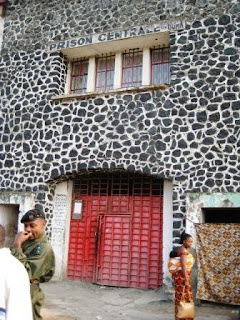
Today, I feel comfortable sitting in the empty little room that was burned during November’s recent war. The bare bench and plastic chairs suffice for our project.
We begin receiving all the minors, young boys from ages 11 to 17, who have been tossed carelessly into jail. In a country where you are guilty until proven innocent. Where none of these children have ever had a trial. Some have been here 3 weeks, some close to a year. HEAL Africa’s Choisir La Vie (Choose Life AIDs program) staff, Mama Noella and Pastor Olivier begin the interviews.
Truth be told, a problem that has become so apparent in Goma is the vast numbers of Child Headed Households (CHH). Many families, orphaned by AIDS, fall under the responsibility of the oldest child, whether he may be 17 or she may be 15. All their younger siblings, or their nieces or nephews, must be cared for. During our interviews, some told of living with a disabled grandmother who had no income. Some have no one, no shoes and tattered shorts. We continue down the list of children, hearing their painfully searing stories of abandonment, desperate survival, and unjust introductions into prison. Fear clouds their eyes, deep scars on their faces tell of stories not mentioned, fungus destroys their toe nails. Most have never studied enough to read or write.
We sit next to them and hear their stories and tell them of friends in Australia willing to support them by paying their $50 fees to leave the prison. Of friends in Mexico and Minnesota willing to invest in them by giving them small income generation grants so that they may be able to provide for themselves in honest, sustainable ways, as simple as they may be. Most say they have already participated in small activities like selling shoes, bread or gas on the street. They would be happy to have an opportunity to leave with hope and a fresh start. Most have no “home” to return to. No one but themselves cares about their survival.
Leaving the jail already exhausted, we drive around Goma, visiting other Child Headed Households. We ease our way among the sewer-muddied alleys of Birere neighborhood, trying not to gag at the sights and smells. Trying to not cry when I see the 4 year old boy rinsing the cut on his ankle with sewer water, his little friend trying to fill up a crushed bottle with the same trickle of “water.” We see brave young men of ages 19 and 21, who are each taking care of 4 children through selling things. We drive towards the volcano and tread over loose, sharp rock to other homes. Bleating goats, soldiers, police, dirty children, all of it becomes part of the scenery. We see the joy and hope of the young children that are able to go to school due to the hard work of their older sibling or caretaker uncle.
By the time we arrive home 10 hours after the start of our day, our feet are black with grime, our brains are mush.
However, I can’t help but think. A lot; thoughts seeking resolution, questions demanding answers. I’m struck again by the reality that we are one world. One humanity. Your problems are my problems and my problems are yours. This economic downfall has affected everyone in the world, not only the US. Since December, the local currency has already devalued from 500 Fc per dollar to 650 Fc. These orphans, not given opportunities, could end up becoming young criminals from desperation to satisfy their bellies. Given opportunities, they might be able to give their own children a hope and a future. They themselves could be agents of change in their country.
The bottom line that bothers me is that somehow, I am more “free” than they are because I have a passport and a background and support from others that allow me ‘out’ when things are bad. They don’t.
Am I really free if my brother or my sister is not?
Can our pride for our freedom drive us to fight for another’s liberty as well?

Wednesday, January 14, 2009

The Joy of the Hope of Success!

Quite a title, I know, but it was the best way I could capture that feeling!
Saturday, we helped our first group of women who have “graduated” from HEALing Arts’ sewing class to form their own association. Twelve women, all of whom have suffered incredible things, are now standing together and have decided to work jointly for their success and that of their families. From the woman who was raped and now has a beautiful 10 month old baby, to the young woman who shook in fear for hours in a dark ditch in the forest with a compound fracture, hiding from the soldiers who were rampaging her village, to the widowed and abandoned, to the woman who has finally received solid crutches so that she may move around with agility, despite the loss of function of her legs from polio.
All I could think was, “and I get to sit in the same room as these women?” HEAL Africa has treated every woman in this room, and now they are all healthy physically, emotionally and spiritually. One of the spiritual counselors, Mama Ciza, accompanied me in the car and could not help but exclaim over and over again in joy, “That one,” she would point, “she was so, so traumatized. And now look at her! She’s healed! She’s so strong! And that one, she was so, so devastated. And now see, she’s joyful, she’s so, so happy!” The crowd of 12 women and their babies, Mama Ciza, Annifa (manager of HEALing Arts) and I crammed into two vans. All of them, the sewing machines they had received as income generation grants from HEALing Arts, stools and baskets.
Loudly, we weaved our way in the hot sun, shining dust and endless streams of cars, motos and people, patiently sweating our way through the terrible planning of road construction: no alternate route. However, no one could put a damper on the energy and happiness in the cars!
HEALing Arts loaned these women money to help secure their first lease. There is no banking for the vast majority of Congolese, so they are obligated to pay 6 months up front in order to gain a lease, which renders most of them incapable of overcoming this first step. Together, they could pool together one month, but lacked $300 for the remaining 5, which they have received as a loan from HEALing Arts.
“Stop, we’re here!” Annifa’s voice took me out of my musings about a system that makes the poor suffer even more. A tiny red door in a long line of small businesses, right next to the market in the Katindo neighborhood. The women’s eyes welled with excitement, butterflies dancing in their stomachs. This would be their livelihood, the crib of their growth as independent, healed women who have formed a cooperative together, despite all odds. They have proved it! They have overcome yet again!
A squat lady with a large mole on her lip and a loud voice identified herself as the landlord and informed us that she had lost the key. Our driver, Theo, loudly banged on the padlock that bound the red metal door with a hammer until he was able to pry it off. Already our eclectic group of people had attracted an immense crowd of people and school children ogling the entrance of something brand-new into their commercial district. The red door screeched open with a puff of dust. Sparkling in the hot sun, dirt encased everything inside this little room with no windows that would now be 12 women’s work space. The men moved a fake wall, removed old, rotting furniture and broken tiles. As a previous landlord myself, I couldn’t help but laugh at how American renters would have treated me had I ever delivered an office to them in such a manner!
A fierce match was on for the final negotiations of the lease. “You promised to put in electricity, we don’t see it anywhere!” demanded Mama Ciza, Annifa and the interim association’s president, the woman in crutches. “I told you, we will put a cable in soon!” the thickset woman hunkered back. Latrine privileges, privacy, why we had to pay 300 francs for water to clean out the place.
Finally, Mama Ciza, the spiritual counselor, led us all in a time of prayer. All our voices could be heard together, thanking God for blessings and asking for protection and success in their new business. For strength to work well and be good mothers. For faithful clients. For many years to come and much work to be had. Loud singing and clapping followed. By the end of the afternoon, sweat pouring down and smiles bigger than the sky, the women had found the first home for their new venture. An undertaking which promises to bring many more adventures in the next months!

Monday, November 24, 2008

Sweet Moments in Life

May I have the pleasure of introducing you to three special people in my life...

Tate
Tate (grandmother in Swahili) is an ancient woman who is also a fistula patient. Her body has been weakened and emaciated by years of suffering and hard labor, but she is a dear person. Even when people steal her little bag of soap while she does other chores, she does not display bitterness.
The day that Chelsie and I returned from Rwanda after the attacks in and around Goma in late October, the first thing we did was to visit the women at the transit center at the HEAL hospital. They laughed and danced, celebrating that we were back, that we had not abandoned them. We played ball with some of the younger, louder women; talked with the children about school and how they felt when they were hiding under their beds listening to the gunshots; we joked with the older women about life and the process of existing. We also made the rounds to the post-op rooms for fistula patients, where Tate was recovering. As we were catching with up with Tate and getting to know the newer patients, Tate reached over and started playing with my hair. The other women gasped at her audacity to touch a white person’s hair. She glared at them with daring eyes and told them in a stern voice, “I’m her grandmother. She is one of us.” Then she turned to me and informed me, “I’m going to braid your hair. Sit on the ground.” Obediently, I eased myself in between the two plastic-encased mattresses on their simple, chipped aluminum bed frames, trying not to wonder when was the last time they were cleaned. Calmly, with wrinkled hands and decades of experience, Tate proceeded to braid my hair. The rest of the women sat comfortably around us, another barrier being broken forever between us. Although my braid looked beautiful, my spirit was lifted by this undeserved grandmother’s love.

Cristina
About a week ago, I was visiting some of the mamas in their living quarters. This particular day, I happened to be teaching them how to use my camera, and they were giggling hysterically at the pictures they were capturing. One of the young fistula patients walked into the room and when she saw me, she urged me to come and see something. The Mama took her newborn from her friend’s arms and put the baby in my arms. “Majina yako!” she exclaimed. Surprised, I asked, “you named her Cristina?” She nodded proudly as I held this beautiful little baby; my heart warmed all over as the infant stared deep into my eyes. The mother grabbed my camera and took this picture of my namesake.

Helena (Evira)
Helena you already know… she has received a few name changes since the time we met her in the middle of the road in Masisi, unable to walk and stiff to stretch her legs. She has now been at the handicap center, through the support of HEAL Africa’s “Children Like Us” program for children with disabilities. As she has been receiving nutrition, physical therapy, play therapy and care, she has gained much strength. The doctors estimate that in two or three more months, Helena will be walking completely on her own. Her mother beams with joy and pride as she describes how little Helena now sits like a normal person on a chair, how she can lift herself up, and how she has even started walking on her own if she can lean on a wall. Helena herself shines as she exhausts herself in her efforts to show me that she can even jump if I am walking with her! Yes, Helena will walk.

Tuesday, November 11, 2008

Minova Refugee Camp, Eye Stings and Water

Yesterday we went to a brand new refugee camp that sprung up in Minova, right past Sake, about 10 KM away from Goma. We have a team of aid workers from Samaritan’s purse, namely surgeons and water treatment specialists. They were quick to respond to the vast needs here in North Kivu and invited Chelsie and I to help them set up a training session and distribution of water purifying materials. Cholera is quickly becoming a severe problem, and can kill many people simply because they cannot access clean water.
We bumped over the rain washed dirt roads that my body seems to never get used to. As we turned yet another hill next to beautiful forests and bright lakes, out in the middle of nowhere, we came upon the new Minova camp. This refugee camp houses 1,800 people, families from many different tribes, all shoved in in one faraway place out of reach of commerce and food. Their makeshift shelters lacked the UNICEF tarps, showing the camp’s newness, and how little help they had received since their recent flight.
Robinson, the Kenyan water technician, asked for the people to bring them the water that they usually drink. The men came back with a bucket full of muck. It is difficult for it to not seem like I am exaggerating, but truly, this water was dirtier than anything, like water you would be hesitant to wade in, like shallow, slightly stagnant sides of soft mud. The dirt particles, bacteria and mitochondria hung and waved lightly in the pail. We asked if they boiled the water before they drank it, at which they responded, “Rarely, because firewood is difficult to find, and it is rainy season right now. But this water does make our stomachs feel funny.” Samaritan’s Purse was happy to begin training some of the team leaders.
In the meantime, we roped off an area for working in, and the rest of us began separating pails in pairs, with stir sticks, a cloth to drain the clean water in, clothespins for securing them and PUR water purifying packets. Hundreds of people stared at us and then started laughing and joking with us as they realized we spoke Swahili. So many questions, so many proposals!
Out of nowhere, a misfortune for me: a random bug flew into my eye and stung my eyeball. I was told there is a bug that likes to sting people’s eyes and aims for them in their flight. And here I had been nervous about my feet and the huge spiders and bugs of all kinds crawling and hopping around in the bush! My eye has gotten quite swollen and red and constantly tears in pain; I’m also allergic to the bite, and the sting’s poison has spread out past my forehead and down past my nose. I’ve sneezed more times today than any other day of my life!
Back to the story. We finally set up 300 water purifying kits and people were being grouped in teams of six to share the kits, as it would give them enough clean water for 4 days. The results showed a sparkling clean glass of water after 20 minutes. We all tasted its refreshing coolness. Suddenly, it started raining. People got desperate and started pressing. The men guarding the twine barriers got nervous and began swinging sticks to warn people to stay away. We stood in the middle, trying to guard the kits as the mob began throbbing. Pressing in, pushed out. Tempers flared in a moment, rain came down faster and suddenly, they were all gone. The people ran for buckets and escaped as quickly as they could. Men with sticks chasing pregnant women. Children stealing stir sticks, having no idea how to use them. All this work, so close, and they will still have no clean water to drink. Desperation. How many children will die today because starving, thirsty refugees could not retain their anxiety, their fear that maybe they would be left out?

Thursday, November 6, 2008

What about Galula's Sisters?

Gulula is 6 years old and has two brothers and two sisters. The innocent little girls were playing together in their home last week when, in a moment, their lives were altered forever. They found a grenade in their yard, and thinking it was a toy, they played with it until the grenade exploded in their faces. The two oldest have severely burned their faces and arms; Gulula’s eyes were burned, and the scars on her face will change her look forever. Although the mother showed up immediately with all three girls, by the time we were able to visit them at HEAL Africa this week, only Gulula remained at the hospital.


Between two hospital cots in the crowded post-operating room, she sat shyly hugging her knees, motionless. The stiff, fluid-hardened gauze clung to her face like a cast, rendering her expressionless. Many attempts at connecting with her finally earned me her little, scarred hand, which she allowed me to hold as we talked with her mother. Annifa, the HEALing Arts manager, asked the woman where the Gulula’s sisters were. The mother looked down, ashamed, and whispered in a sunken voice, “We can only afford to pay for one of our daughters to have medical treatment, so we had to send the older girls home.” We asked what the rates were, at which she responded the insurmountable amount per girl, $5 per day. Stunned, I thought about what $5 per day meant to most of us in the developed world and my heart was suffocated even further. I looked into Gulula’s soft eyes through the blood-stained gauze and almost wept before them in the crowded, smelly room full of suffering victims.


Gently, we explained to the mother that HEALing Arts had an Emergency Fund that would pay the cost for her other two girls to receive treatment for their burns immediately. I also explained that HEALing Arts has a school where her girls can continue studying as they heal, and that she can learn to sew at our Sewing and Weaving School. The mother could hardly believe all we were telling her, but her smile was big and her handshake was strong as we said good-bye.

Friday, October 31, 2008

How You Can Help & Partner With Goma

PRAY FOR PEACE, SAFETY AND RESOLUTION BETWEEN GEN. NKUNDA (CNDP FORCES) AND KABILA (CONGO PRESIDENT)

To Donate:
1) Send us an email with the amount of your donation prior to mailing a check at cristina.m.edelstein@gmail.com. This allows us to approve funds for food relief and pre-approving medical procedures in a timely manner.
2) Write checks out to HEAL Africa with “HEALing Arts- EMERGENCY FUND” written in the memo. Mail checks to Harper McConnell at P.O. Box 147, Monroe, WA 98272.

To Advocate:
1) Write to your politicials using the letter below. To find them:
Senators: http://www.senate.gov/index.htm
Congressman: https://writerep.house.gov/writerep/welcome.shtml

2) Letter to ban "Conflict Coltan" from being imported to the US; to advocate for conflict-free trade of minerals.
http://healafrica.org/cms/files/media/Coltan%20Letter.pdf
To understand about the coltan problem, read http://www.independent.co.uk/opinion/commentators/johann-hari/johann-h

3) To receive a copy of the Global Call for Action to Stop New War-Rapes in Goma & Eastern Congo! please email Harper McConnell at harper@healafrica.org to sign the petition and distribute it.


On behalf of the people of Goma, thank you for helping us. We thank God for his continual protection of our friends and that nothing- even catastrophes and evil people- is outside of his control. We will once again stand strong. ASANTE! (THANK YOU!).

Thursday, October 30, 2008

Countdown to our Evacuation

Sunday, October 26
2:00 PM Chelsie and Cristina walk 30 women from the fistula transit center and 8 children over to the sports center, where Yole! Africa has organized a festival for peace and safety. Today’s activities include a ‘battle of the bands’ from local hip hop dance groups and a film about this year’s election conflict in Kenya. The women love the entertainment as we sit in the sweltering heat with 3,000 other Goma residents enjoying local talent.

Monday, October 27
7:45 AM Sun shining bright. Chelsie does some yoga as Cristina rides the stationary bike and studies Swahili. We go to the breakfast table and meet Lyn, who somberly warns us that we should know where our passports and money are. Nkunda took over the neighboring town of Kibumba and pushed back the UN forces in the Congo (MONUC). We expect 20,000 refugees running to Goma.
1:28 PM Distracted day with news reports; regardless, we plan for growth of HEALing Arts and Upper Room and CPC’s involvement in DR Congo. Cristina’s French lesson with Stewart is all about the imminent war. Thirty rounds of bullets go off two blocks away in the center of town, where we had heard reports that civilians were stoning MONUC for running away from the war; the UN soldiers responded by killing two civilians and wounding several others. As usual, HEAL Africa has to take care of them. Within one hour, tensions rise. Chelsie downloads some news articles before we race home past thousands of residents heading home.
8:00 PM We send house staff to purchase extra gas for the house and for the motor for our boat. He reports that gas and food prices are already increasing quickly. All short-term volunteers are ordered to return to their home countries the next morning.

Tuesday, October 28
7:04 AM Chelsie is getting dressed and Cristina is in the shower. Jo Lusi knocks on our door saying we should leave Goma immediately for a few days, because “the soldiers will see young girls and then there’s only me between them and you. Better leave and come back in the weekend.” Soon after, Lyn learns that the MONUC general resigned which pleases the people and gives hope. We decide to remain and go to work to fight for normalcy of life.
11:40 AM All our Congolese friends urge us to leave; they say it doesn’t matter that we don’t want to leave them. We are different and an easy target given the attitude towards the UN at the moment. This is the third time they will have lived this war in Goma, they tell us. “We just want them to do whatever they are going to do, kill and steal and then let us get back to life.” Government soldiers lost again and are fleeing to Goma, which is only worse than bad. Many prisoners from the local jail have escaped and increased the chaos. A sense of anarchy settles in.
2:15 PM We cross to Rwanda, our border friends eyeing with reproachful eyes, “You’re abandoning us, too?” We try to justify it, convinced we will return in a day or two. On the Rwanda side, there is a deluge of mzungus who have also been ordered out of the country. Unlike the wealthier NGOs, Chelsie and I are the only white people riding motos to the crowded bus on the way to Kigali. Friends open their homes to us, having cooked fresh lasagna for us. What world do we live in?

Wednesday, October 29
8:00 AM First thoughts after restless nights with dreams: our friends. We call the Lusis, HEALing Arts, Yole Africa and others. Only one friend’s dad was shot by a stray bullet, stores pillaged, bullets ringing all night long. Government soldiers are the main instigators, followed by hopeless and angry young men. HEAL staff lost in the region; found at a Red Cross camp that was later looted.
2:00 PM The urgency for food increases as we worry about our friends locked up in their homes with no provisions and the little groceries and gas available with sky high prices. We worry about how they will survive, since payday has not yet happened for the month and probably won’t anytime soon. We spend at least $20 per day on phone credit, checking up on people and assuring them we are praying and that God will keep them safe and that the world has not forgotten them.
6:15 PM Reports say Nkunda has taken over Goma. Any remaining NGOs are evacuated; Goma residents cringe all night long as more homes are looted, people hurt and many dying. Around 45,000 internally displaced peoples have arrived in Goma in two days, hoping to find safety there- which continues to elude them.
Night Nkunda steps back his CNDP forces, ‘generously ‘allowing the MONUC to keep Goma calm under the chaos and panic caused by the defeated soldiers and fear of the CNDP forces, under the claim that it is to “stop panicking the population of Goma.” Looting and the sound of bullets continue to assail our friends, who still have no food. Rwanda exchanging gunfire over the border into the Congo.

Thursday, October 30
6:50 AM First text messages from Congolese friends assuring us they are OK other than losing belongings to theft. The silent but screaming question demands: how will everyone eat?
9:00 AM Once the roads are a bit less dangerous, our friend finally carries his father to the HEAL hospital for treatment to his gunshot. His medical bill will be passed on to HEALing Arts as his family has not money to pay and surgery is needed immediately.
2:00 PM Hope seems dim that the door will be opened for us to return anytime soon. We now focus on pooling together our resources via friends who care, to start supplying starving people with food and medical treatment.